


Have you ever wondered if you are really brushing your teeth properly?
Although it may seem a simple task we repeat by habit, the reality is that most of us make mistakes that could cost us in the long run.
It is not just about having a white smile; the health of your mouth is, quite literally, the gateway to the health of your entire body.
Why your mouth is more important than you realise
We often think of tooth decay as the only dental problem, but the impact of negligent hygiene goes much further. It is estimated that tooth decay affects 90% of the world’s population at some point , and nearly half of adults over 30 suffer some form of gum disease (periodontitis).
What you may not have known is that the bacteria that build up in your mouth can travel through the bloodstream and affect vital organs. Poor hygiene has been linked to serious complications such as cardiovascular disease, uncontrolled diabetes and even problems during pregnancy. In addition, 85% of cases of bad breath originate from inadequate cleaning.
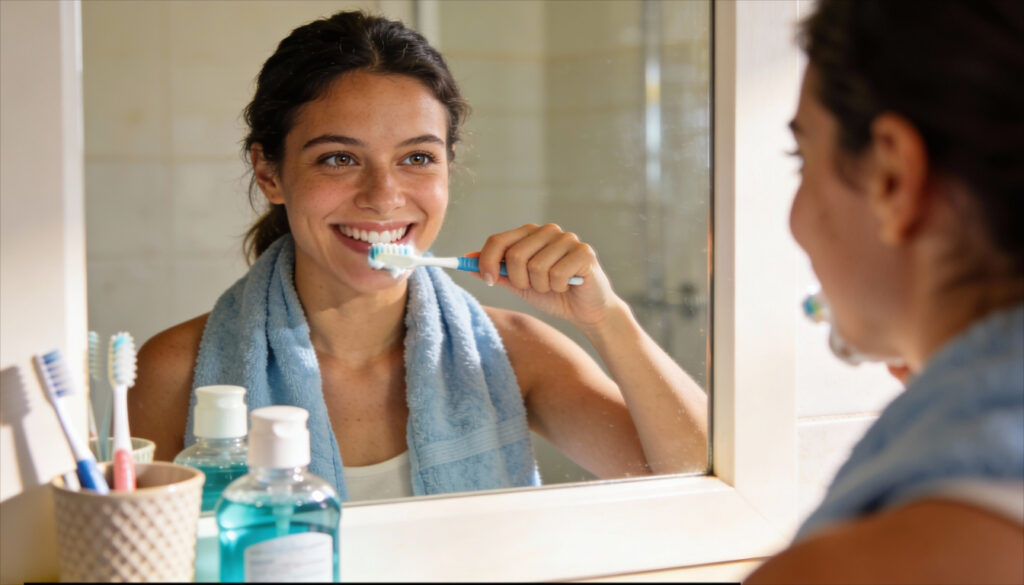
The art of brushing: The Bass Technique
It is not only how long you brush, but how you do it. The technique recommended by experts is the Bass Technique. Here we explain how to master it:
- The correct angle: Place the brush at a 45-degree angle towards the gum line.
- Contact: The bristles should cover half gum and half tooth.
- Gentle pressure: Pressing harder will not clean better; in fact, brushing too hard can wear down the enamel and cause your gums to recede.
- Precise movements: Make small horizontal vibrations (10–15 per area) and then a vertical sweep from the gum towards the tooth.
- Don’t forget the tongue: Brushing the tongue from back to front is key to removing the bacteria that cause bad breath.
Remember that the minimum time for an effective brushing is 2 minutes, although ideally you should spend between 2 and 3 minutes to ensure a thorough clean.
Manual or Electric? Choose your tool
When choosing a brush, you have several options:
- Manual Brush: It is inexpensive and offers full control, but its effectiveness depends entirely on your technique. Always choose soft or medium bristles.
- Electric Brush: Studies show they remove up to 100% more plaque than manual brushes and reduce gingivitis by an additional 21%. They are ideal if you want to ensure you meet timing recommendations thanks to their timers.
- Sonic Brush: Uses high-frequency vibrations that create microcurrents of fluid, being very effective for people with braces.
Dental floss: Your best ally (before brushing)
If you only brush your teeth, you are leaving 40% of the tooth surface unclean. Dental floss is essential to remove plaque where the brush cannot reach, reducing the risk of periodontal disease by 40%.
A professional tip: Use dental floss BEFORE you brush. This first removes debris between the teeth and allows the fluoride in your toothpaste to penetrate much better, increasing its retention by 30%. When using it, be sure to wrap it around each tooth forming a “C” and slide it gently so as not to damage the gums.
The finishing touch: Mouthwash
Mouthwash does not replace brushing, but it is an excellent complement. There are several types depending on your needs:
- With fluoride: Ideal for those at high risk of tooth decay.
- Alcohol-free: The best option for daily use, as it does not irritate the mucous membranes and helps with dry mouth.
- With chlorhexidine: Only under medical prescription to treat active gingivitis or after surgery, as prolonged use can stain the teeth.
Care for every stage of life
- Young children (2-6 years): They need parental help and an amount of toothpaste the size of a grain of rice. Rinsing is not recommended due to the risk of swallowing it.
- Teenagers and Adults: Brushing at least twice a day is recommended (ideally after every meal) and daily use of dental floss.
- Older Adults (65+): It is vital to use soft brushes to protect sensitive gums and alcohol-free mouthwashes to combat the dry mouth common at this age.
Maintaining a complete hygiene routine will not only save you unexpected visits to the dentist, but will also improve your quality of life and overall wellbeing. Do you think you could adjust something in your routine today?
Leave a Reply